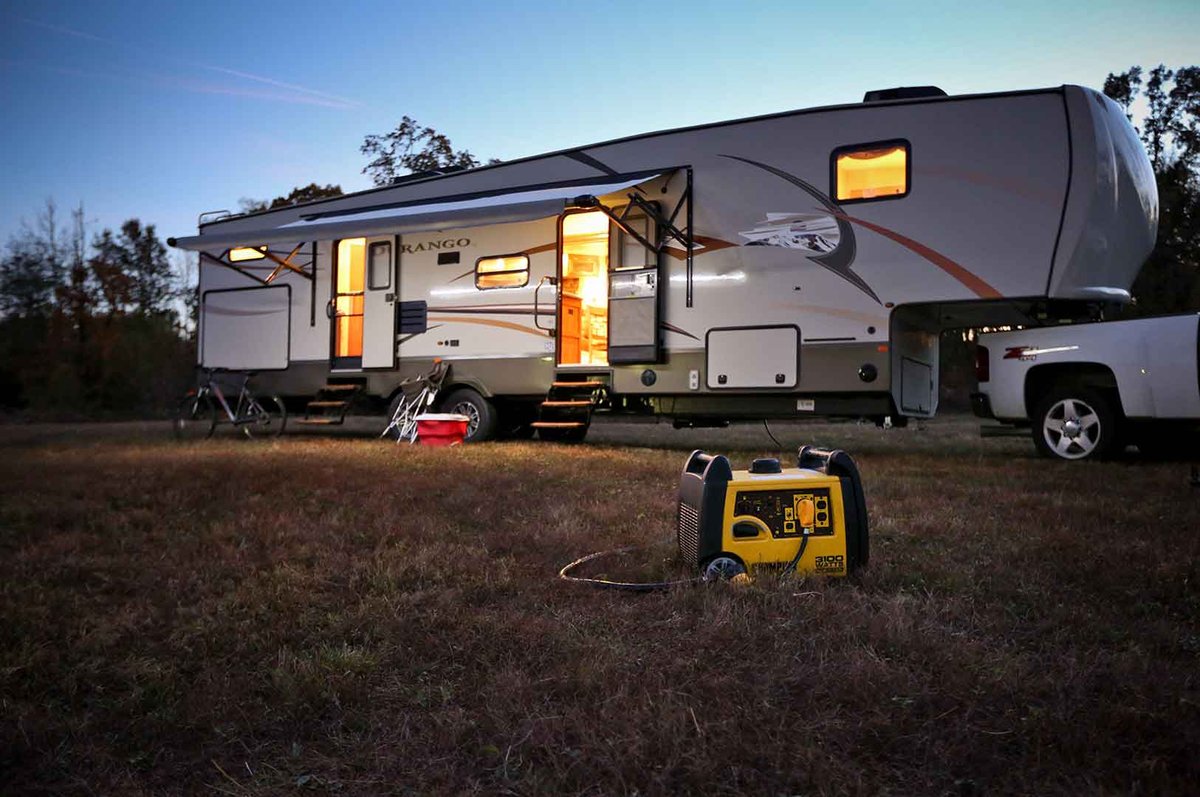
Picture this: you're miles from civilization, nestled in a quiet campground, but you still want the comforts of home – a hot cup of coffee, a cool blast from the AC, or a fully charged laptop for a remote workday. That's where a reliable RV generator becomes your best friend. But with so many options on the market, comparing top RV generator brands and models can feel like navigating a maze. Which one truly delivers the power, quietness, and portability you need for your unique adventures?
As a seasoned road warrior and power solutions expert, I'm here to cut through the jargon and give you the real-world insights you need. This guide will help you understand what matters most in an RV generator and spotlight the contenders that truly stand out in 2025.
At a Glance: Your RV Generator Quick-Start Guide
- Prioritize Power Output: Match the generator's wattage to your essential RV appliances (especially the AC).
- Decibels Matter: Aim for quieter models (under 60 dB) for campground etiquette and peace of mind.
- Fuel Your Adventure: Consider gasoline (common, efficient), propane (cleaner, stores well), or dual-fuel options for flexibility.
- Portability vs. Power: Heavier units usually mean more power; decide if wheels/handles are non-negotiable for your use.
- Safety First: Always run generators in well-ventilated areas and use a carbon monoxide detector.
- The Best Value Isn't Always the Cheapest: Factor in durability, warranty, and long-term fuel efficiency.
Why Your RV Needs a Powerhouse Companion
RV generators are far more than just glorified extension cords; they're the beating heart of your off-grid comfort. They pump essential electricity into your rig, powering everything from your crucial air conditioning during a scorching summer day to the microwave, refrigerator, and even charging your devices. Without one, boondocking becomes a much more rustic experience, and even serviced campgrounds might have limited power options.
Choosing the right generator means understanding the nuances between power, noise, fuel efficiency, and features that make life on the road smoother. Let's break down the essential criteria we used to evaluate the best of the best.
Decoding the DNA of a Great RV Generator: Key Evaluation Criteria
Before we dive into specific models, it’s crucial to understand the metrics that separate a good generator from a great one. These are the benchmarks we apply when choosing the best RV generator for various scenarios, ensuring you get a reliable power solution.
- Power Output (Wattage & Capacity): This is the core function. Generators list both "running watts" (continuous power) and "peak/surge watts" (brief burst for starting motors). You need enough running watts for your most critical appliances simultaneously, plus ample surge capacity for items like your RV's air conditioner. Larger engines generally mean higher wattage, but also more bulk and weight.
- Portability (Weight, Dimensions, Features): How easy is it to move? Consider the generator's weight, its physical footprint, and whether it has features like wheels, telescoping handles, or a compact design that makes lifting and storing less of a chore.
- Noise Levels (Decibel Rating): Few things disrupt a peaceful campsite faster than a roaring generator. Decibels (dB) are logarithmic, meaning a 10 dB increase feels twice as loud. Aim for models under 60 dB, especially if you plan to use it in shared spaces. Many campgrounds have strict noise ordinances.
- Fuel Efficiency and Type (Runtime at Different Loads):
- Gasoline: Widely available, often more efficient in colder weather, and typically provides maximum wattage.
- Propane: Cleaner burning, stores indefinitely without going stale, and can be more convenient if you already carry propane for your RV. Often has slightly lower wattage output.
- Dual-Fuel: Offers the best of both worlds, providing flexibility in fuel sources.
- Solar: Eco-friendly, silent, and eliminates fuel storage, but relies on sunlight and often comes with a higher upfront cost and weight.
- "Runtime" indicates how long a generator can run on a full tank at a specified load (e.g., 1/2 or 1/4 load). Real-world runtime decreases significantly at higher loads.
- Ease of Use (Start Mechanism, Economy Mode, Parallel Capabilities):
- Start Type: Manual (recoil/pull-cord), electric (button push), or remote (key fob). Electric and remote starts are a godsend.
- Economy Mode: Often called "eco mode," this feature adjusts engine speed to match the load, saving fuel and reducing noise when full power isn isn't needed.
- Parallel Capability: Allows you to link two smaller generators together to double the power output, offering flexibility.
- Durability and Build Quality: A generator is an investment. Look for robust construction, reliable engines, and features that protect the unit from the elements and wear and tear of travel.
- Outlets: Ensure it has the right outlets for your RV, typically a 120V 30A RV outlet (TT-30R). Smaller generators might only have standard household outlets and require an adapter, which doesn't change the amperage.
- Warranty: A strong warranty (typically 1-3 years) provides peace of mind and protects your investment.
The Contenders: A Deep Dive into Top RV Generator Brands and Models
Now, let’s get to the generators themselves. We've scrutinized the leading models, highlighting their strengths, weaknesses, and what makes them suitable for different types of RVers.
1. Honda EU2200i / EU2200IC: The Gold Standard for Quiet Portability
Why it stands out: If peace and quiet are paramount, the Honda EU2200i (and its slightly updated IC variant) is almost legendary. It's often dubbed the "Best for Quiet Operation and Portability" and the "Best Portable RV Generator" for good reason. Its super-quiet operation makes it a favorite in noise-sensitive campgrounds.
- Price: Around $1,099.00
- Weight: 46.5 lb
- Dimensions: 20.98 x 12.24 x 19.72 in
- Power Output: 1800W continuous / 2200W peak
- Fuel Type: Gasoline
- Engine: 121cc Honda GXR120 Commercial Series
- Noise Level: 47-58 dB (remarkably quiet)
- Runtime: 6 hours at 1/2 load on a 0.95 gal tank
- Key Features: Fuel shutoff valve, easy-start mechanism, parallel capability (for linking two units), 30-amp RV outlet, improved oil filler, low oil warning, eco mode.
- Pros:
- Extremely quiet, making it ideal for peaceful environments.
- Very compact and easy to carry, a true portable workhorse.
- Excellent fuel efficiency, especially with eco mode.
- Quality Honda engine for reliability.
- 3-year warranty for peace of mind.
- Cons:
- Suited for smaller RV setups or limited power needs; may struggle with continuous high-demand appliances like a full-size RV air conditioner (though it can often start a 13,500 BTU AC with a soft start kit).
- Lacks a fuel gauge.
- Recoil start only.
- Oil refills can be a bit messy.
Best for: Small to medium RVs, campers, or anyone prioritizing whisper-quiet operation and minimal weight for basic power needs (charging, lights, small appliances).
2. Westinghouse iGen4500: The Feature-Rich Powerhouse
Why it stands out: The Westinghouse iGen4500 punches well above its weight class, offering high power output, a suite of convenient features, and surprisingly quiet operation for its capacity. It's frequently cited as a "Best Quiet RV Generator" for those needing more juice.
- Price: $846-$869
- Weight: 104 lb (some sources say 98 lbs)
- Dimensions: 24.5 x 17.5 x 20 in
- Power Output: 3900W-3700W running / 5000W-4500W peak
- Fuel Type: Conflicting info here: rvshare.com table indicates dual-fuel (gasoline/propane), while houseandbeyond.org description states gasoline only. Verify specific model variant. Let's assume the common dual-fuel version is being referred to for this analysis.
- Engine: 224cc Westinghouse 4-stroke OHV
- Noise Level: 52 dB (impressive for its power)
- Runtime: 14 hours on gasoline / 21 hours on propane at 25% load (rvshare.com); up to 18 hours at 1/4 load on a 3.4 gal tank (houseandbeyond.org).
- Key Features: Electric and remote start, LED data center (fuel, power, runtime, total hours), integrated wheels and telescoping handle, RV-ready 30-amp outlet, 120V outlets, USB ports, economy mode (though some sources conflict on this presence, check specific model year).
- Pros:
- High power output comfortably handles most larger RV appliances, including AC.
- Remarkably fuel-efficient for its size, offering extended runtimes.
- Convenient electric and remote start.
- Highly portable for its weight, thanks to wheels and a suitcase-style handle.
- Comprehensive LED data display.
- Durable design and 3-year warranty.
- Cons:
- Relatively heavy (100+ lbs) can still be a lift for some, even with wheels.
- Potential automatic choke issues have been reported in some units.
- Remote start range can be limited.
- Conflicting information on eco mode presence; confirm before purchase if critical.
Best for: Mid-to-large RVs, campers, or trailers needing reliable power for air conditioning and multiple appliances, with a strong emphasis on quiet operation and convenient features.
3. Jackery 3000 Pro: The Eco-Friendly Silent Giant
Why it stands out: For those seeking a truly silent and sustainable power solution, the Jackery 3000 Pro represents the "Best Solar Generator for Sustainable Power." It bypasses fossil fuels entirely, making it perfect for eco-conscious RVers or those who want absolutely no noise or exhaust.
- Price: Conflicting info again: rvshare.com table lists $3,999, description lists $1,499.00. The higher price is more typical for a 3000W solar generator with panels. Let's assume the higher end for a full system.
- Weight: 99.2 lb
- Dimensions: 25.7 x 20.6 x 13.1 in
- Power Output: 3000W (continuous)
- Fuel Type: Solar (via integrated battery storage)
- Key Features: Smart app control (Wi-Fi or Bluetooth), retractable handle, wheels, Quiet Canyon Cooling System, advanced safety features.
- Pros:
- 100% solar-powered for zero emissions and environmental friendliness.
- Completely silent operation—no engine noise, no exhaust fumes.
- Advanced smart app control for monitoring and management.
- Wheels and handle aid in portability for its weight.
- Cons:
- Heavy for its power output compared to gas generators.
- Significantly higher price point than fossil-fuel generators.
- Reliance on sunlight for recharging; limitations in cloudy weather or shaded areas.
- Requires additional solar panels for optimal recharging (sold separately usually).
Best for: Environmentally conscious RVers, those who prioritize absolute silence, or who frequently camp in sunny locations and are willing to invest in a premium, sustainable power system.
4. Champion Power 4500W Dual Fuel: Best Value for High Power Needs
Why it stands out: Champion has carved out a niche for offering robust power solutions at a competitive price, and their 4500W Dual Fuel inverter generator is no exception. It's praised as the "Best Value for High Power Needs" due to its ability to run demanding appliances on gasoline or propane.
- Price: Conflicting info: rvshare.com table lists $1294, description lists $898.99. The lower price is more common.
- Weight: 92.2 lb
- Dimensions: 23.2 x 17.7 x 20.1 in
- Power Output: 4500W peak (strong enough for most RV AC units)
- Fuel Type: Dual-fuel (gasoline and propane)
- Noise Level: 61 dB
- Runtime: Up to 14 hours on gasoline, 21 hours on propane (at 25% load)
- Key Features: Electric start, Cold Start Technology (for easy starts in cold weather), smart economy mode, foldable handle and wheels, RV-ready 30-amp outlet, multiple household outlets, low Total Harmonic Distortion (safe for sensitive electronics).
- Pros:
- Excellent wattage for running large RVs with AC and multiple appliances simultaneously.
- Dual-fuel capability provides flexibility and extended runtime on propane.
- Electric start and Cold Start Technology enhance user convenience.
- Good portability for its power, thanks to wheels and a foldable handle.
- Low THD protects sensitive electronics.
- Cons:
- Still relatively heavy, though manageable with wheels.
- Some users report it may not consistently meet advertised wattage under heavy, continuous load.
- Potential minor issues with oil dipstick fit.
- Louder than the Honda or Westinghouse iGen4500 at 61 dB.
Best for: RVers with larger rigs needing consistent power for AC and other high-draw appliances, who appreciate the flexibility of dual-fuel and a strong feature set without breaking the bank.
5. Champion 76533: A Solid Performer with Dual-Fuel Flexibility
Why it stands out: Another strong showing from Champion, the 76533 is an "Editor's Choice" for good reason. It’s a workhorse, offering significant power and the invaluable dual-fuel option, making it a versatile choice for many RVers.
- Engine: 224cc Champion single-cylinder OHV
- Start Type: Electric start
- Fuel: Gasoline/Propane (Dual-fuel)
- Output: 3800W continuous / 4750W max on gasoline; 3420W continuous / 4275W max on propane
- Fuel Tank: 3.4 gal
- Noise Level: 59 dBA
- Runtime: 9 hours on gasoline (1/2 load); 10.5 hours on propane (20lb tank)
- Outlets: 120V 30A RV, 120V 30A locking, two 120V 20A
- Weight: 95.7 lbs
- Warranty: 3-year limited
- Pros:
- Powerful output, capable of running most RVs with AC.
- Dual-fuel option for increased flexibility and longer runtimes with propane.
- Electric start for convenience.
- LED panel for monitoring power usage.
- Good 3-year warranty.
- Relatively quiet at 59 dBA for its power class.
- Cons:
- Large and heavy, though often has wheels (not explicitly listed but implied by weight).
- Higher fuel consumption (9 hours at half load on gasoline) compared to some inverter models.
Best for: RVers who need reliable, substantial power and the flexibility of dual-fuel, willing to trade a little extra weight for robust performance.
6. WEN GN200i / 56203i: The Budget-Friendly Quiet Champion
Why it stands out: WEN has become a go-to for affordable yet surprisingly capable generators. The WEN GN200i (or 56203i, a similar model often featured) is a "Budget Pick" that delivers impressive quietness and portability for its price point.
- Engine: 79.7 cc 4-stroke OHV
- Start Type: Manual (recoil)
- Fuel: Gasoline
- Output: 1600W continuous / 2000W max
- Fuel Tank: 1 gal
- Noise Level: 51 dB (excellent for its price)
- Runtime: 6 hours (1/2 load)
- Outlets: 2 x 120V 20A 3-prong, 5V USB, 12V DC 8.3A
- Weight: 48 lbs
- Warranty: 2-year
- Pros:
- Extremely inexpensive, offering great value.
- Very lightweight and portable, easy to lift and move.
- Remarkably quiet at just 51 dB, competitive with premium models.
- Provides enough power for basic charging and small appliances.
- Cons:
- Small gas tank limits runtime (6 hours at half load).
- No dedicated 30A RV outlet (requires an adapter, which doesn't increase amperage).
- Manual pull-cord start.
- Not powerful enough for most RV air conditioners.
Best for: Tent campers, small pop-ups, van lifers, or anyone on a tight budget needing basic, quiet power for charging devices, lights, and minimal appliances.
7. Generac iQ2000: Best for Small RVs (Another Portable Inverter)
Why it stands out: Generac's iQ2000 is a contender that offers solid portable power for those with smaller RVs, emphasizing ease of use and a compact footprint.
- Engine: 80cc OHV
- Start Type: Manual (recoil)
- Fuel: Gasoline
- Output: 1700W continuous / 2200W max
- Fuel Tank: 1.2 gal
- Noise Level: Not specified, but inverter generators are typically quiet.
- Runtime: 10.75 hours (1/4 load)
- Outlets: 12 VDC, 1.5A 5VDC USB, 120V 20A 5-20R duplex, TT-30R (RV) - This contradicts previous info about requiring an adapter. The presence of a TT-30R means it has a dedicated RV outlet.
- Weight: 46.6 lbs
- Warranty: 2-year limited
- Pros:
- Inexpensive and a good entry-level option.
- Very lightweight and portable, comparable to the Honda.
- Decent continuous power (1,700 watts) for its size.
- Includes a dedicated TT-30R (RV) outlet, which is a big plus for small RVs.
- Cons:
- Pull-cord start only.
- Relatively small fuel tank, though good runtime at 1/4 load.
- Not powerful enough for large AC units.
Best for: Small travel trailers, pop-up campers, or individuals needing lightweight, portable power for basic RV functions and charging, without the premium price tag.
8. Pulsar PG4000IR: Longest Runtime for Extended Stays
Why it stands out: For those who prioritize continuous operation without frequent refueling, the Pulsar PG4000IR offers an impressive runtime, coupled with substantial power output and convenient starting options. It's dubbed the "Longest Runtime" model in its class.
- Engine: 224cc OHV
- Start Type: Electric and remote start
- Fuel: Gasoline
- Output: 3500W continuous / 4000W max
- Fuel Tank: 3.4 gal
- Runtime: 15 hours (1/2 load) – excellent for its output
- Noise Level: 63 dB
- Outlets: 120V 20A duplex, 120V 30A RV, 12V DC 8A, integrated USB outlet
- Weight: 92.6 lbs
- Warranty: 1-year limited
- Pros:
- Impressive 15-hour runtime at half load, perfect for extended use.
- Powerful engine, capable of 3,500W continuous output, handling most RV needs.
- Convenient electric and remote start.
- Includes a dedicated 30A RV outlet.
- Good value for the power and runtime it provides.
- Cons:
- Only a one-year warranty, shorter than competitors.
- Can make a noticeable "whining" noise at higher loads.
- Heavy and bulky, although often equipped with wheels.
- Louder than premium inverter models at 63 dB.
Best for: RVers who need significant power for long durations without constant refueling, such as those on multi-day boondocking trips or working remotely from their RV.
Other Noteworthy Mentions
- Champion 3500W (Best 4,000-Watt Generator - houseandbeyond.org): While manual start and gasoline-only, it offers great fuel efficiency (17 hours at 1/4 load) and is relatively compact for its power. A solid choice if you don't mind the pull-start.
- Westinghouse 3600W Dual Fuel (Best Dual Fuel RV Generator - houseandbeyond.org): A robust dual-fuel option with electric and remote start, capable of switching fuels on the fly. Its main drawback is being quite loud at 69 dBA and heavy.
How to Choose Your Perfect RV Generator: Making the Smart Decision
With these excellent options laid out, how do you pinpoint the right one for your adventures? It boils down to a thoughtful assessment of your specific needs and priorities.
1. Calculate Your Power Needs Accurately
This is the absolute first step. List all the appliances you anticipate running simultaneously and find their wattage requirements. Remember the difference between running watts and surge watts.
- Essential Check: Can it run your RV's air conditioner? A typical 13,500 BTU AC needs 1,200-1,800 running watts but 3,000-4,000 surge watts. A soft start capacitor can significantly reduce the AC's surge draw, making smaller generators viable.
- Factor in "Nice-to-Haves": Microwave, hair dryer, electric kettle – these are high-wattage items you might use briefly.
- Don't Forget the Basics: Lights, phone chargers, TV, small fans.
- Rule of Thumb: Sum up the running watts of your simultaneous essentials, then add the highest surge wattage of any single appliance. Give yourself about 10-20% extra headroom.
2. Prioritize Quietness
If you plan to camp in developed campgrounds or anywhere near other people, noise level is paramount. Many campgrounds enforce specific generator hours and decibel limits.
- Under 60 dB: Generally acceptable for most campgrounds.
- Under 55 dB: Ideal for true peace and quiet.
- Over 65 dB: Likely to annoy neighbors and might violate campground rules.
3. Consider Fuel Type and Availability
Your RV's fuel type and your preferred boondocking style will influence this choice.
- Gasoline: Most common, easy to refuel from your RV's tank (if it's gas powered), but goes stale over time.
- Propane: Cleaner, stores indefinitely, often more convenient if your RV already uses propane. Slightly less efficient at maximum loads.
- Dual-Fuel: Offers the best flexibility, allowing you to switch between sources as needed. A smart choice for versatility.
- Solar: The ultimate in quiet and clean power, but comes with a higher cost and dependency on sunlight. Great for long-term sustainable use.
4. Portability vs. Permanent Installation
- Portable Units: Ideal if you need to move the generator (e.g., for noise, sun, or to prevent theft). Look for wheels and handles on heavier models.
- Built-in Generators: More powerful, integrated into the RV, but much more expensive and complex to maintain. This guide focuses on portable units.
5. Essential Features to Look For
- Electric/Remote Start: A game-changer for convenience, especially on cold mornings or when you'd rather not step outside.
- Economy Mode: Saves fuel and reduces noise when you don't need full power. A must-have for inverter generators.
- 30-Amp RV Outlet (TT-30R): This is standard for most RVs. Avoid models that only have household outlets if you plan to run higher-draw RV appliances, as adapters don't increase amperage.
- Low Oil Shutoff: Protects your engine from damage.
- Fuel Gauge: Simple but incredibly useful to avoid running dry unexpectedly.
- Warranty: Longer warranties (3 years) reflect manufacturer confidence in durability.
By carefully weighing these factors against your budget and travel habits, you'll be well on your way to selecting the perfect power companion for your RV.
Mastering Your RV Generator: Best Practices & Safety Essentials
Having the right generator is only half the battle; knowing how to use and maintain it safely is paramount. Ignoring these crucial steps can lead to serious hazards.
Smart Startup and Operation
- Placement is Key for Ventilation: ALWAYS operate your generator outdoors, in a well-ventilated area, away from your RV's windows, doors, and vents. Carbon monoxide (CO) is an odorless, colorless, deadly gas.
- Install a CO Monitor: This isn't optional. Every RV should have a functioning carbon monoxide monitor, and you should check its batteries regularly.
- Check Choke Settings: For manual-start generators, adjust the choke based on temperature and altitude. A warm engine usually needs less choke.
- Respect Capacity: Never overload your generator. Exceeding its rated output can damage the generator and connected appliances.
- Strategic Appliance Startup: Turn on motor-operated appliances (like your refrigerator or freezer) first. They draw a large surge of power when starting but stabilize quickly.
- AC Protocol: Always turn off your RV's air conditioner before starting or stopping the generator. This prevents dangerous power surges that can damage the AC unit or the generator itself.
- Monitor Wattage: Keep an eye on your generator's power output (many have a display) and your appliance's requirements to ensure you're within limits.
Refueling and Maintenance: Handle with Care
- Cool Down Before Refueling: NEVER refuel a running or hot generator. Power it down completely and allow it to cool off for at least 15-20 minutes before adding fuel. Spilled fuel on a hot engine can ignite, leading to severe burns or fires.
- Use Fresh Fuel: Gasoline goes stale. If storing for extended periods, use a fuel stabilizer or drain the tank. Stale fuel can clog carburetors and cause starting issues.
- Regular Oil Checks: Check the oil level before each use, and change it according to the manufacturer's schedule.
- Air Filter: Clean or replace the air filter regularly, especially if operating in dusty conditions.
- Spark Plug: Inspect and replace the spark plug as recommended.
Following these guidelines ensures your generator runs efficiently, safely, and extends its lifespan, allowing you to focus on enjoying your travels.
Answering Your Burning Questions About RV Generators
Even after a deep dive, some common questions always surface. Here are crisp, clear answers to help finalize your decision.
Which fuel type is better for an RV generator?
It depends on your priorities. Gasoline is widely available and typically provides maximum wattage. It's often preferred if your RV also runs on gasoline. Propane burns cleaner, doesn't go stale, and is convenient if you already carry propane tanks for your RV, offering longer runtimes with larger tanks. However, propane often results in slightly lower wattage output. Dual-fuel generators offer the best of both worlds, providing flexibility when fuel options are limited.
What are the benefits of an electric start?
An electric start (and even remote start) is a huge convenience. It saves you the frustration and physical effort of repeatedly pulling a recoil cord, especially on cold mornings or when the generator is placed in an awkward spot. It allows the generator to start reliably with the push of a button or a remote fob.
Can I refuel a generator while it’s running?
Absolutely not. For safety reasons, you must always power down the generator and allow it to cool off completely before adding fuel. Fuel vapors are highly flammable, and contact with hot engine components can cause a fire or explosion.
Do I need a special RV outlet, or can I just use an adapter?
Most RVs use a 120V 30A (TT-30R) outlet. While an adapter can convert a standard 120V 20A household outlet to fit your RV's circular plug, it does not change the current capacity. A 20A outlet will still only provide 20 amps, which is often insufficient for high-demand RV appliances like air conditioners, which typically require the full 30 amps. For reliable power, especially for your AC, look for a generator with a dedicated 30A RV outlet.
Powering Your Next Adventure
Choosing the right RV generator is a significant decision that directly impacts your comfort and freedom on the road. By understanding your power needs, prioritizing features like noise level and fuel type, and committing to safe operating practices, you can confidently select a generator that will be a reliable companion for countless adventures to come. From the whisper-quiet efficiency of a Honda to the robust power of a Champion, there's a perfect match out there for every RVer. Happy trails!